
Talking with kids about hard things

Talking with your kids right after a traumatic event
Read the English text version
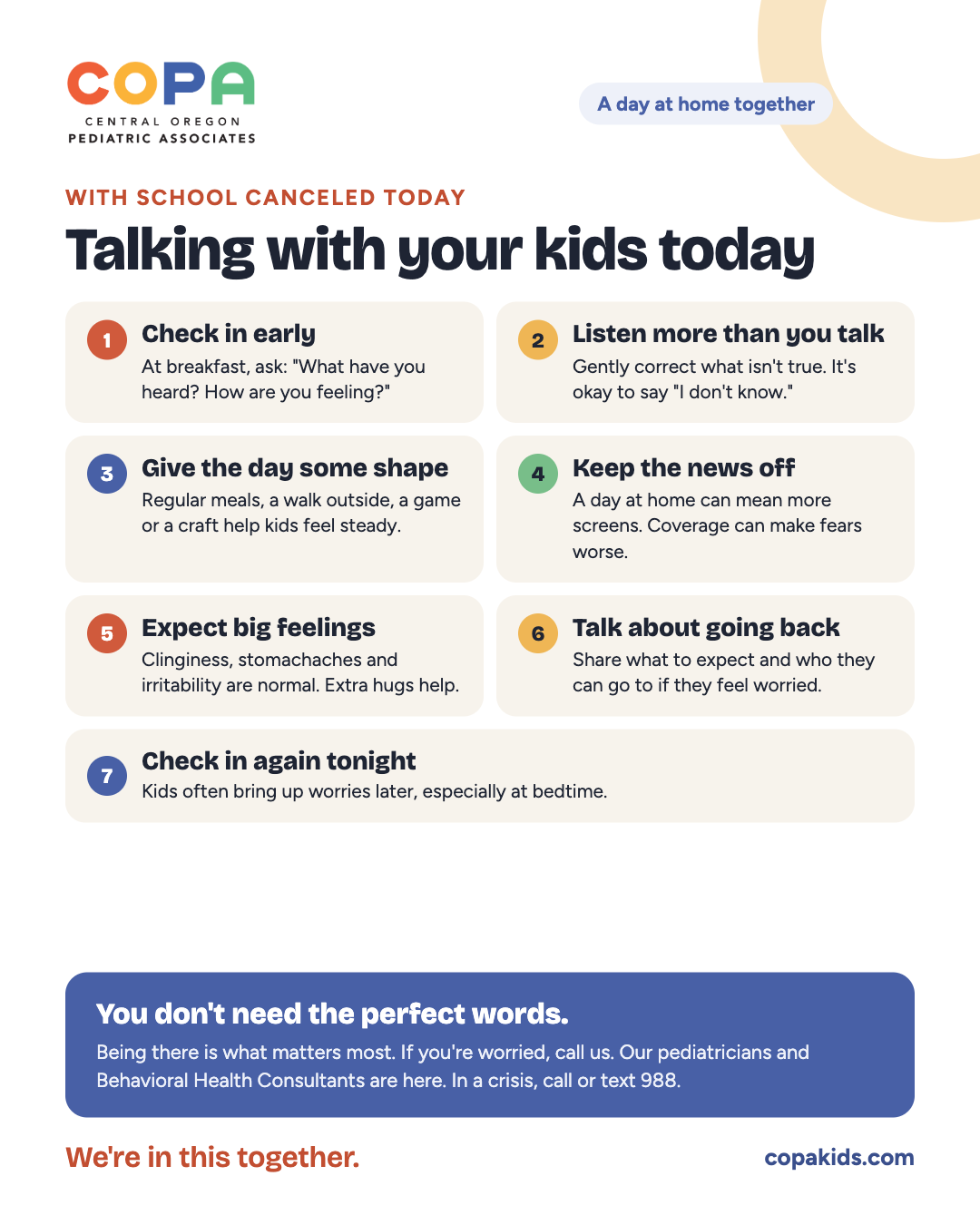
Talking with your kids today
A day at home together, with school canceled today
- Check in early. At breakfast, ask: “What have you heard? How are you feeling?”
- Listen more than you talk. Gently correct what isn’t true. It’s okay to say “I don’t know.”
- Give the day some shape. Regular meals, a walk outside, a game or a craft help kids feel steady.
- Keep the news off. A day at home can mean more screens. Coverage can make fears worse.
- Expect big feelings. Clinginess, stomachaches and irritability are normal. Extra hugs help.
- Talk about going back. Share what to expect and who they can go to if they feel worried.
- Check in again tonight. Kids often bring up worries later, especially at bedtime.
You don’t need the perfect words. Being there is what matters most. If you’re worried, call us. Our pediatricians and Behavioral Health Consultants are here. In a crisis, call or text 988.
We’re in this together.
Leer la versión en texto en español
Hablar con sus hijos hoy
Un día en casa juntos, con las clases canceladas hoy
- Pregunte temprano. En el desayuno, pregunte: “¿Qué has escuchado? ¿Cómo te sientes?”
- Escuche más de lo que habla. Con cariño, corrija lo que no sea cierto. Está bien decir “no sé”.
- Dele forma al día. Las comidas a la hora de siempre, una caminata, un juego o una manualidad ayudan a los niños a sentirse estables.
- Mantenga las noticias apagadas. Un día en casa puede significar más pantallas. Las noticias pueden aumentar los miedos.
- Espere emociones fuertes. El apego excesivo, los dolores de estómago y la irritabilidad son normales. Los abrazos extra ayudan.
- Hablen sobre el regreso. Cuénteles qué pueden esperar y a quién pueden acudir si se sienten preocupados.
- Vuelva a preguntar esta noche. Los niños suelen hablar de sus preocupaciones más tarde, sobre todo a la hora de dormir.
No necesita las palabras perfectas. Lo más importante es estar presente. Si le preocupa su hijo, llámenos. Nuestros pediatras y consultores de salud conductual están aquí para ayudar. En una crisis, llame o envíe un mensaje de texto al 988.
Estamos juntos en esto.
We’re here to help.
If you’re worried about how your child is coping, our pediatricians and Behavioral Health Consultants can help.
Call us: 541-389-6313
Our pediatric nurses are available 24/7.
In a crisis, call or text 988
Free, confidential support, any time.
In an emergency, call 911.
How to talk with your kids after something scary
Read the English text version
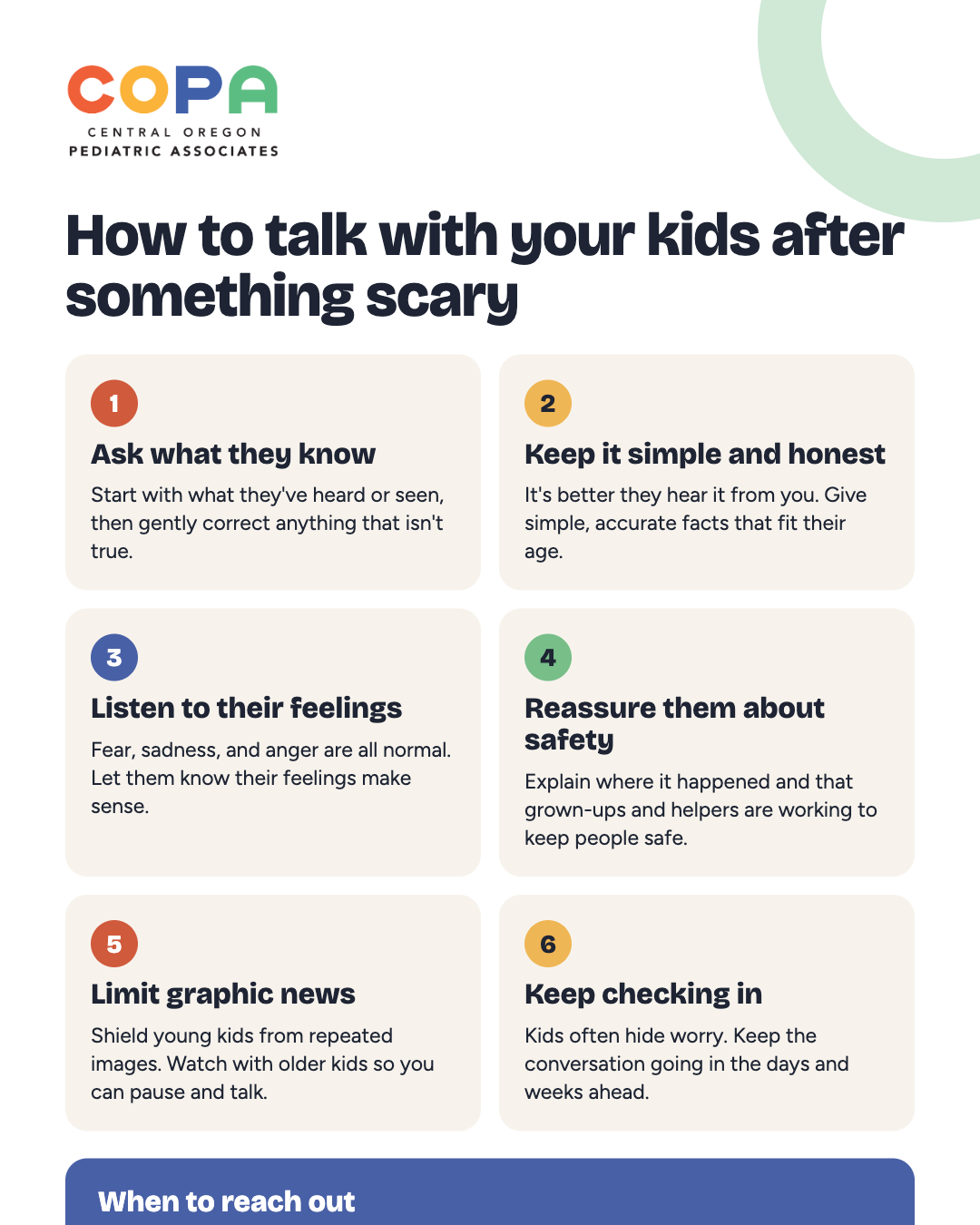
How to talk with your kids after something scary
- Ask what they know. Start with what they’ve heard or seen, then gently correct anything that isn’t true.
- Keep it simple and honest. It’s better they hear it from you. Give simple, accurate facts that fit their age.
- Listen to their feelings. Fear, sadness, and anger are all normal. Let them know their feelings make sense.
- Reassure them about safety. Explain where it happened and that grown-ups and helpers are working to keep people safe.
- Limit graphic news. Shield young kids from repeated images. Watch with older kids so you can pause and talk.
- Keep checking in. Kids often hide worry. Keep the conversation going in the days and weeks ahead.
When to reach out: Trouble sleeping, headaches or stomachaches, clinginess, irritability, or fears that don’t go away may mean your child needs more support. Call us. Our pediatricians and Behavioral Health Consultants are here to help.
Adapted from the American Academy of Pediatrics, HealthyChildren.org
Leer la versión en texto en español
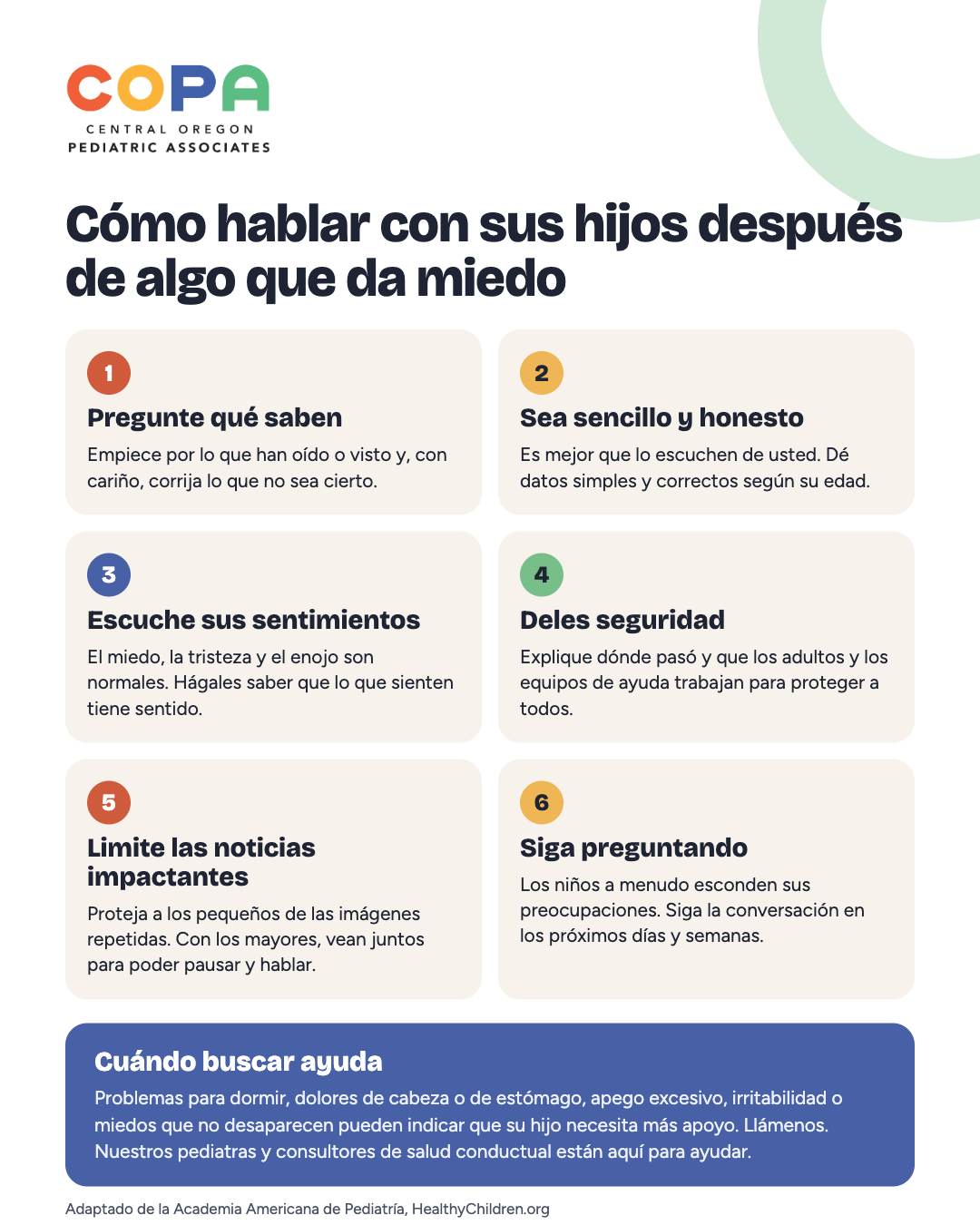
Cómo hablar con sus hijos después de algo que da miedo
- Pregunte qué saben. Empiece por lo que han oído o visto y, con cariño, corrija lo que no sea cierto.
- Sea sencillo y honesto. Es mejor que lo escuchen de usted. Dé datos simples y correctos según su edad.
- Escuche sus sentimientos. El miedo, la tristeza y el enojo son normales. Hágales saber que lo que sienten tiene sentido.
- Deles seguridad. Explique dónde pasó y que los adultos y los equipos de ayuda trabajan para proteger a todos.
- Limite las noticias impactantes. Proteja a los pequeños de las imágenes repetidas. Con los mayores, vean juntos para poder pausar y hablar.
- Siga preguntando. Los niños a menudo esconden sus preocupaciones. Siga la conversación en los próximos días y semanas.
Cuándo buscar ayuda: Problemas para dormir, dolores de cabeza o de estómago, apego excesivo, irritabilidad o miedos que no desaparecen pueden indicar que su hijo necesita más apoyo. Llámenos. Nuestros pediatras y consultores de salud conductual están aquí para ayudar.
Adaptado de la Academia Americana de Pediatría, HealthyChildren.org
Part 1 of 3
Common reactions in kids and teens after a shooting
Read the English text version
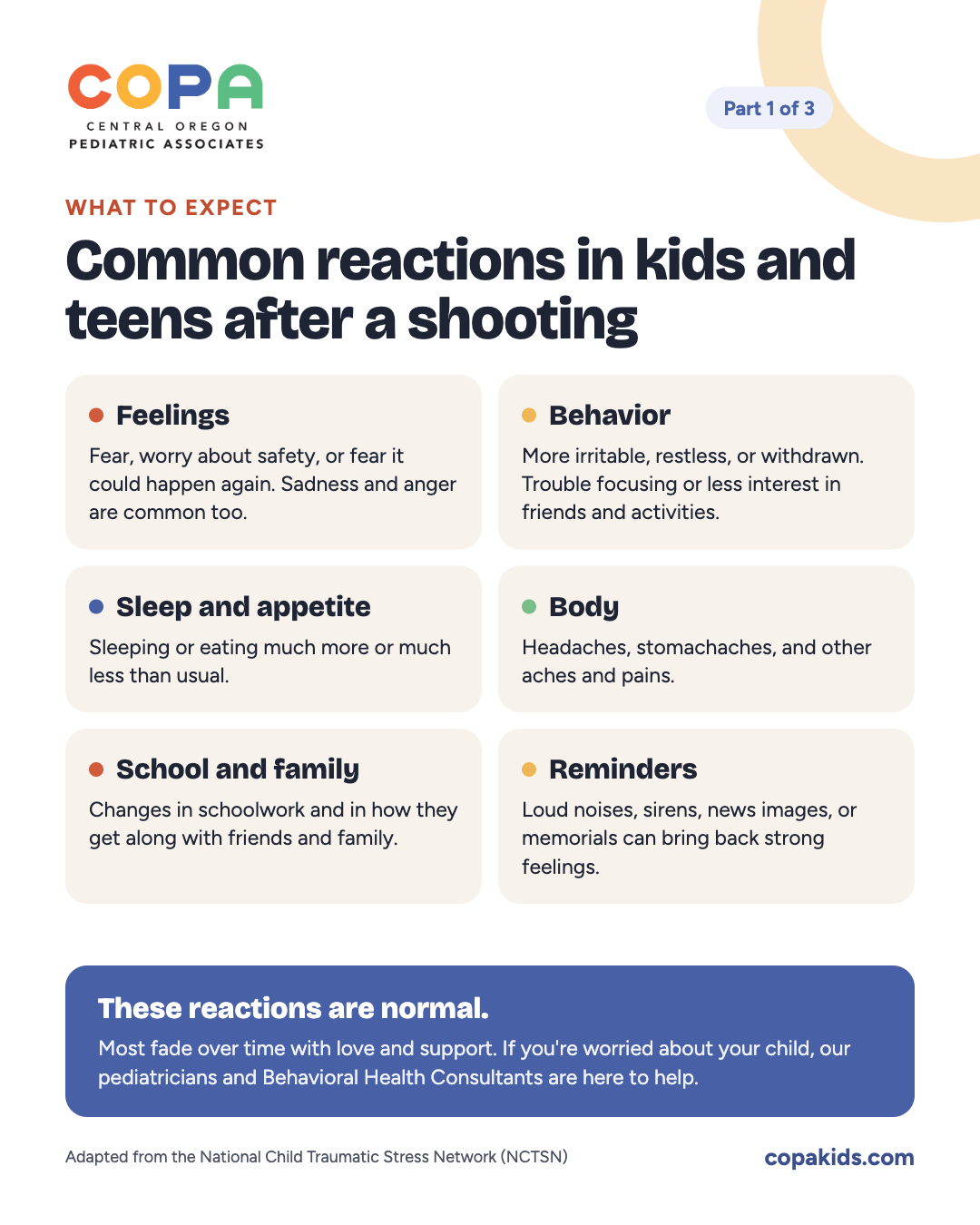
Part 1 of 3: Common reactions in kids and teens after a shooting
What to expect
- Feelings: Fear, worry about safety, or fear that it will happen again. Sadness and anger are common too.
- Behavior: More irritable, restless or withdrawn. Trouble focusing, or less interest in friends and activities.
- Sleep and appetite: Sleeping or eating much more or much less than usual.
- Body: Headaches, stomachaches and other aches and pains.
- School and family: Changes in schoolwork and in how they get along with friends and family.
- Reminders: Loud noises, sirens, news images or memorials can bring back strong feelings.
These reactions are normal. Most fade with time, love and support. If you’re worried about your child, our pediatricians and Behavioral Health Consultants are here to help.
Adapted from the National Child Traumatic Stress Network (NCTSN)
Leer la versión en texto en español
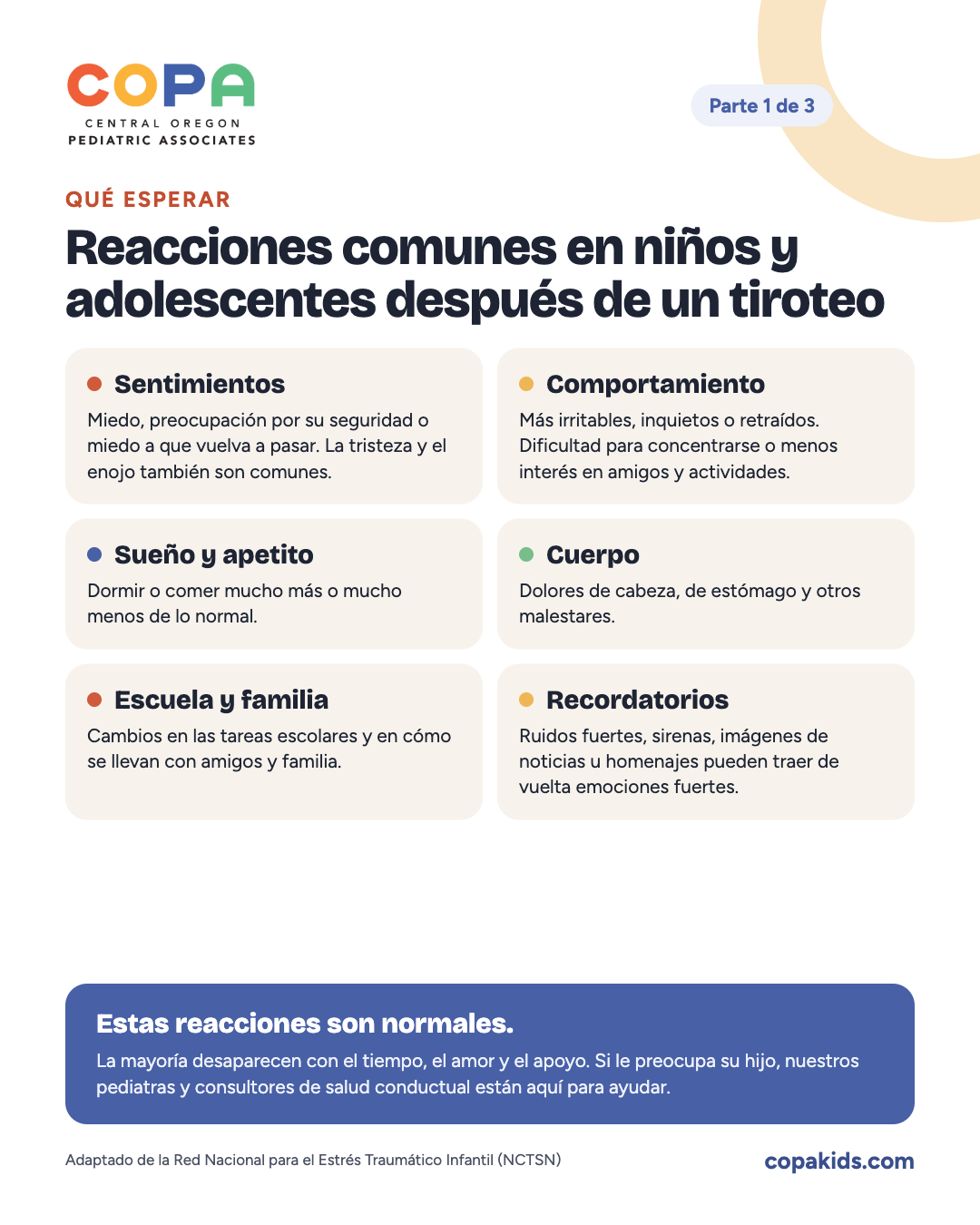
Reacciones comunes en niños y adolescentes después de un tiroteo
Qué esperar
- Sentimientos: Miedo, preocupación por su seguridad o miedo a que vuelva a pasar. La tristeza y el enojo también son comunes.
- Comportamiento: Más irritables, inquietos o retraídos. Dificultad para concentrarse o menos interés en amigos y actividades.
- Sueño y apetito: Dormir o comer mucho más o mucho menos de lo normal.
- Cuerpo: Dolores de cabeza, de estómago y otros malestares.
- Escuela y familia: Cambios en las tareas escolares y en cómo se llevan con amigos y familia.
- Recordatorios: Ruidos fuertes, sirenas, imágenes de noticias u homenajes pueden traer de vuelta emociones fuertes.
Estas reacciones son normales. La mayoría desaparecen con el tiempo, el amor y el apoyo. Si le preocupa su hijo, nuestros pediatras y consultores de salud conductual están aquí para ayudar.
Adaptado de la Red Nacional para el Estrés Traumático Infantil (NCTSN)
Part 2 of 3
8 ways to support your child in the weeks ahead
Read the English text version
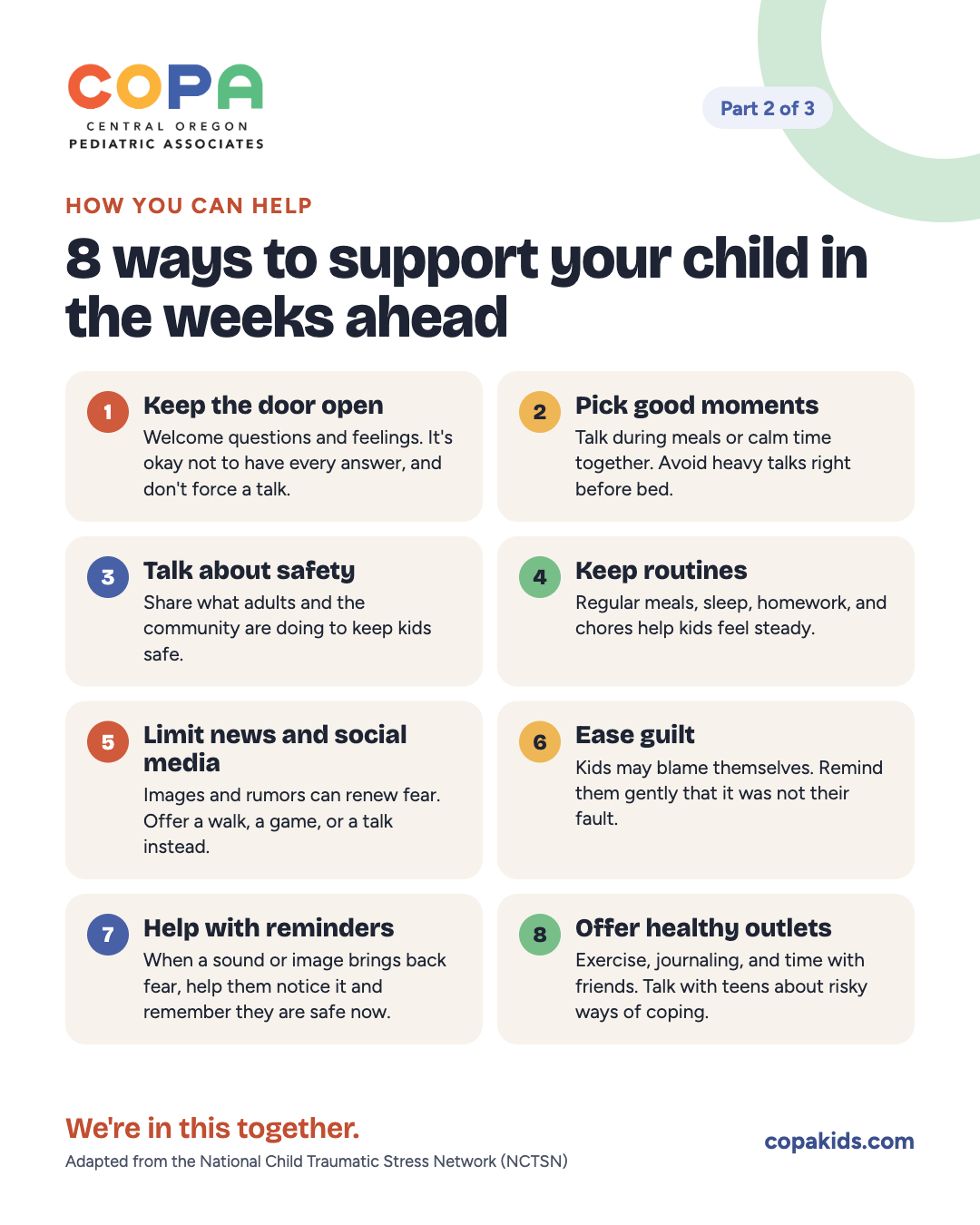
Part 2 of 3: How you can help
8 ways to support your child in the weeks ahead
- Keep the door open. Welcome questions and feelings. It’s okay not to have every answer, and don’t force a talk.
- Pick good moments. Talk during meals or calm time together. Avoid heavy talks right before bed.
- Talk about safety. Share what adults and the community are doing to keep kids safe.
- Keep routines. Regular meals, sleep, homework, and chores help kids feel steady.
- Limit news and social media. Images and rumors can renew fear. Offer a walk, a game, or a talk instead.
- Ease guilt. Kids may blame themselves. Remind them gently that it was not their fault.
- Help with reminders. When a sound or image brings back fear, help them notice it and remember they are safe now.
- Offer healthy outlets. Exercise, journaling, and time with friends. Talk with teens about risky ways of coping.
We’re in this together.
Adapted from the National Child Traumatic Stress Network (NCTSN)
Leer la versión en texto en español
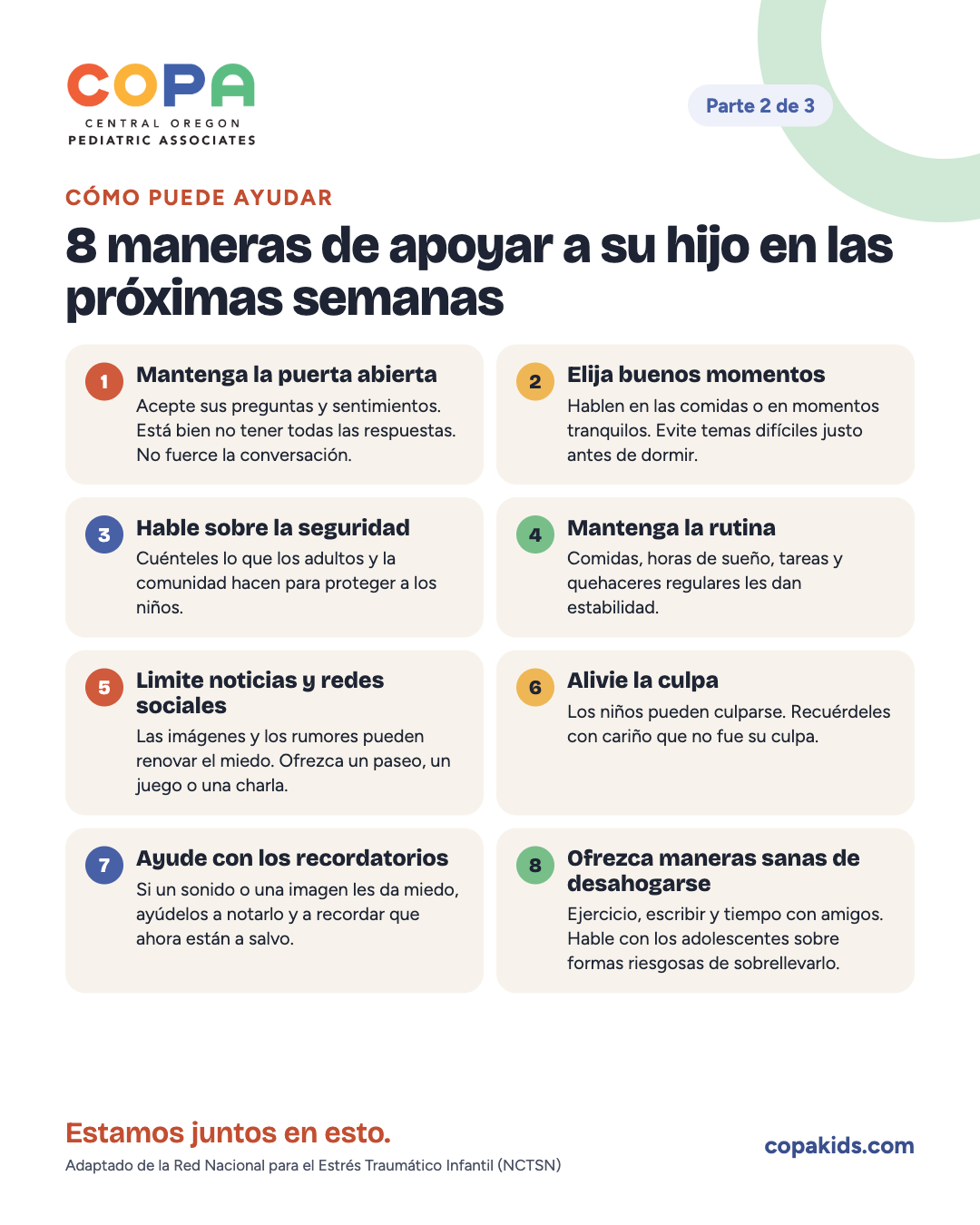
Parte 2 de 3: Cómo puede ayudar
8 maneras de apoyar a su hijo en las próximas semanas
- Mantenga la puerta abierta. Acepte sus preguntas y sentimientos. Está bien no tener todas las respuestas. No fuerce la conversación.
- Elija buenos momentos. Hablen en las comidas o en momentos tranquilos. Evite temas difíciles justo antes de dormir.
- Hable sobre la seguridad. Cuénteles lo que los adultos y la comunidad hacen para proteger a los niños.
- Mantenga la rutina. Comidas, horas de sueño, tareas y quehaceres regulares les dan estabilidad.
- Limite noticias y redes sociales. Las imágenes y los rumores pueden renovar el miedo. Ofrezca un paseo, un juego o una charla.
- Alivie la culpa. Los niños pueden culparse. Recuérdeles con cariño que no fue su culpa.
- Ayude con los recordatorios. Si un sonido o una imagen les da miedo, ayúdelos a notarlo y a recordar que ahora están a salvo.
- Ofrezca maneras sanas de desahogarse. Ejercicio, escribir y tiempo con amigos. Hable con los adolescentes sobre formas riesgosas de sobrellevarlo.
Estamos juntos en esto.
Adaptado de la Red Nacional para el Estrés Traumático Infantil (NCTSN)
Part 3 of 3
Self-care for parents, and when to reach out to COPA
Read the English text version
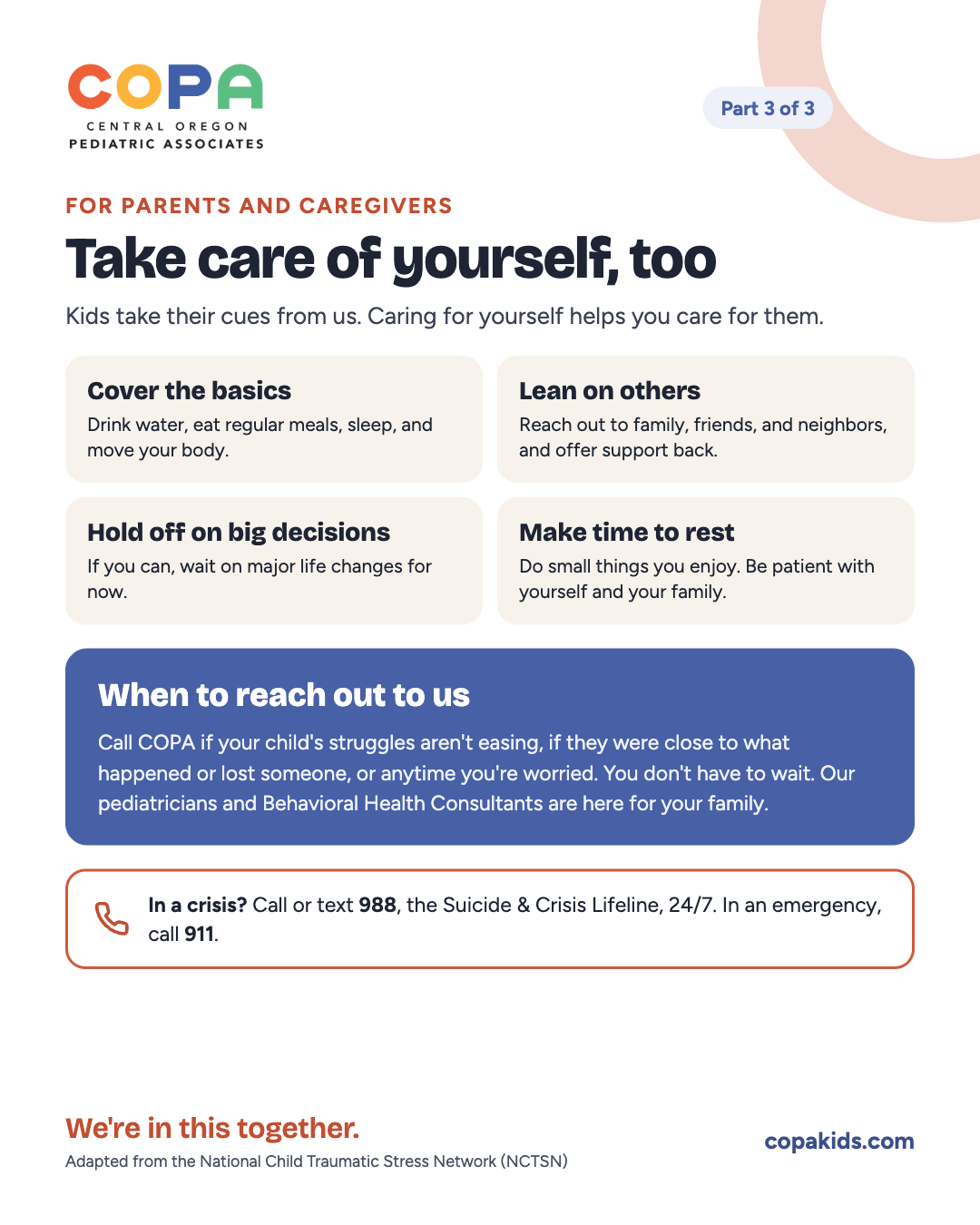
Part 3 of 3: Take care of yourself, too
For parents and caregivers
Kids take their cues from us. Caring for yourself helps you care for them.
- Cover the basics. Drink water, eat regular meals, sleep, and move your body.
- Lean on others. Reach out to family, friends, and neighbors, and offer support back.
- Hold off on big decisions. If you can, wait on major life changes for now.
- Make time to rest. Do small things you enjoy. Be patient with yourself and your family.
When to reach out to us
Call COPA if your child’s struggles aren’t easing, if they were close to what happened or lost someone, or anytime you’re worried. You don’t have to wait. Our pediatricians and Behavioral Health Consultants are here for your family.
In a crisis? Call or text 988, the Suicide & Crisis Lifeline, 24/7. In an emergency, call 911.
We’re in this together.
Adapted from the National Child Traumatic Stress Network (NCTSN)

Leer la versión en texto en español
Parte 3 de 3: Cuídese usted también
Para padres y cuidadores
Los niños siguen nuestro ejemplo. Cuidarse usted le ayuda a cuidarlos a ellos.
- Cubra lo básico. Tome agua, coma a sus horas, duerma y mueva el cuerpo.
- Apóyese en otros. Busque a familiares, amigos y vecinos, y ofrézcales apoyo también.
- Espere antes de tomar decisiones importantes. Si puede, deje los cambios grandes para más adelante.
- Tómese tiempo para descansar. Haga pequeñas cosas que disfrute. Tenga paciencia con usted y con su familia.
Cuándo comunicarse con nosotros
Llame a COPA si las dificultades de su hijo no mejoran, si estuvo cerca de lo que pasó o perdió a alguien, o cuando le preocupe. No tiene que esperar. Nuestros pediatras y consultores de salud conductual están aquí para su familia.
¿Está en una crisis? Llame o envíe un mensaje de texto al 988, la Línea de Prevención del Suicidio y Crisis, las 24 horas, los 7 días de la semana. Hay apoyo en español. En una emergencia, llame al 911.
Estamos juntos en esto.
Adaptado de la Red Nacional para el Estrés Traumático Infantil (NCTSN)
Part 1 of 2
A script for explaining a school shooting to kids with autism or learning differences
Read the English text version
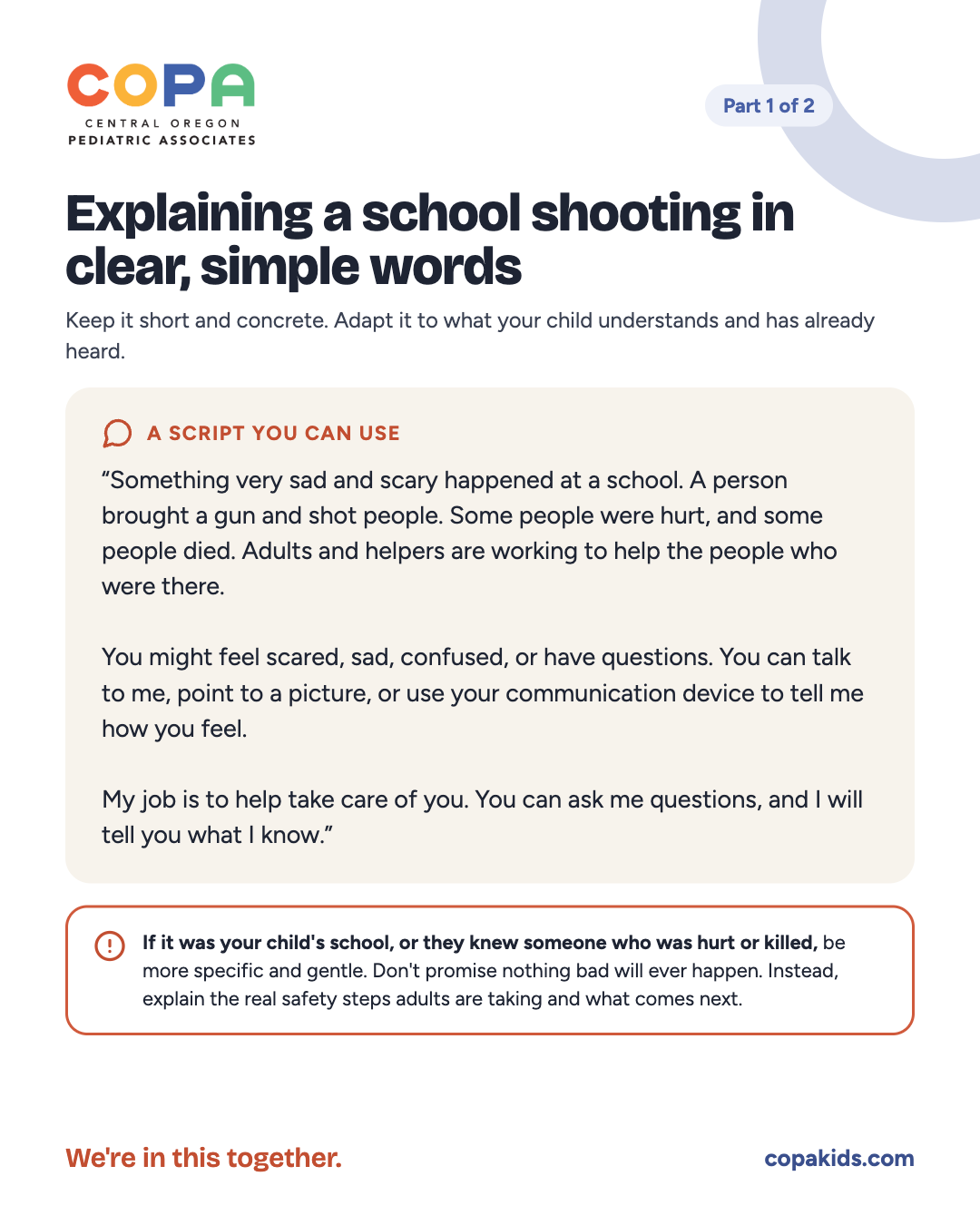
Part 1 of 2: Explaining a school shooting in clear, simple words
Keep it short and concrete. Adapt it to what your child understands and has already heard.
A script you can use:
“Something very sad and scary happened at a school. A person brought a gun and shot people. Some people were hurt, and some people died. Adults and helpers are working to help the people who were there.
You might feel scared, sad, confused, or have questions. You can talk to me, point to a picture, or use your communication device to tell me how you feel.
My job is to help take care of you. You can ask me questions, and I will tell you what I know.”
If it was your child’s school, or they knew someone who was hurt or killed, be more specific and gentle. Don’t promise nothing bad will ever happen. Instead, explain the real safety steps adults are taking and what comes next.
We’re in this together.
Leer la versión en texto en español
Parte 1 de 2: Cómo explicar un tiroteo en una escuela con palabras claras y sencillas
Hable de forma breve y concreta. Adapte lo que dice a lo que su hijo entiende y a lo que ya ha escuchado.
Un guion que puede usar:
“Pasó algo muy triste y que da miedo en una escuela. Una persona llevó un arma y le disparó a otras personas. Algunas personas resultaron heridas y algunas personas murieron. Los adultos y los equipos de ayuda están trabajando para ayudar a las personas que estaban allí.
Puede que te sientas asustado, triste, confundido o que tengas preguntas. Puedes hablar conmigo, señalar una imagen o usar tu dispositivo de comunicación para decirme cómo te sientes.
Mi trabajo es ayudar a cuidarte. Puedes hacerme preguntas y te diré lo que sé.”
Si fue en la escuela de su hijo, o si conocía a alguien que resultó herido o murió, sea más específico y delicado. No le prometa que nunca va a pasar nada malo. En cambio, explíquele las medidas de seguridad reales que están tomando los adultos y lo que va a pasar después.
Part 2 of 2
7 ways to adapt the conversation for kids with autism or learning differences
Read the English text version
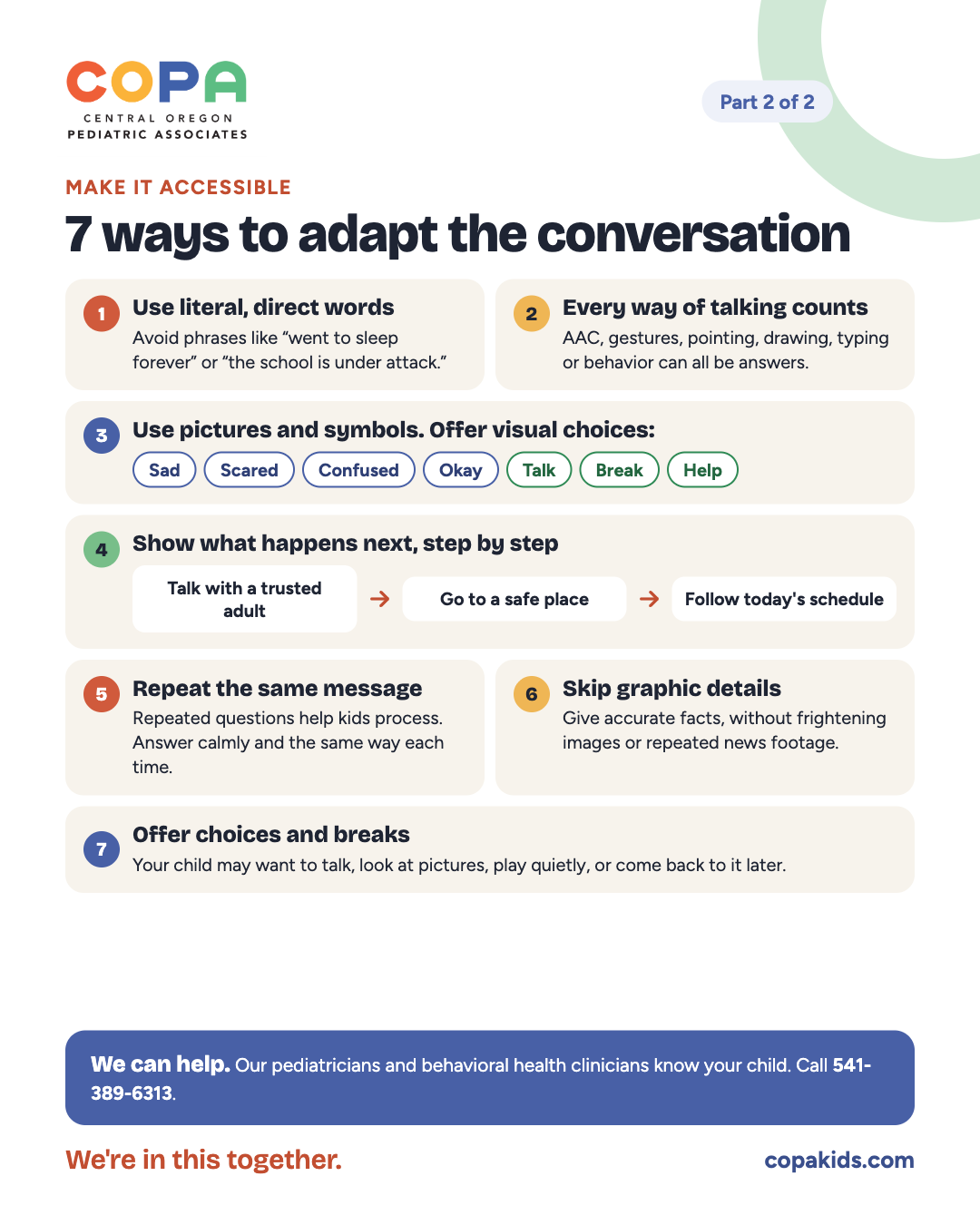
Part 2 of 2: 7 ways to adapt the conversation
- Use literal, direct words. Avoid phrases like “went to sleep forever” or “the school is under attack.”
- Every way of talking counts. AAC, gestures, pointing, drawing, typing or behavior can all be answers.
- Use pictures and symbols. Offer visual choices: Sad · Scared · Confused · Okay · Talk · Break · Help
- Show what happens next, step by step. Talk with a trusted adult → Go to a safe place → Follow today’s schedule
- Repeat the same message. Repeated questions help kids process. Answer calmly and the same way each time.
- Skip graphic details. Give accurate facts, without frightening images or repeated news footage.
- Offer choices and breaks. Your child may want to talk, look at pictures, play quietly, or come back to it later.
We can help. Our pediatricians and behavioral health clinicians know your child. Call 541-389-6313.
We’re in this together.
Leer la versión en texto en español
Parte 2 de 2: 7 maneras de adaptar la conversación
- Use palabras literales y directas. Evite frases como “se fue a dormir para siempre” o “la escuela está bajo ataque”.
- Toda forma de comunicarse cuenta. La comunicación aumentativa y alternativa (CAA), los gestos, señalar, dibujar, escribir o el comportamiento pueden ser respuestas.
- Use imágenes y símbolos. Ofrezca opciones visuales: Triste · Asustado · Confundido · Bien · Hablar · Descanso · Ayuda
- Muestre lo que pasa después, paso a paso. Hablar con un adulto de confianza → Ir a un lugar seguro → Seguir el horario de hoy
- Repita el mismo mensaje. Las preguntas repetidas ayudan a los niños a procesar. Responda con calma y de la misma manera cada vez.
- Evite los detalles impactantes. Dé datos correctos, sin imágenes que asusten ni noticias repetidas.
- Ofrezca opciones y descansos. Puede que su hijo quiera hablar, ver imágenes, jugar tranquilo o volver al tema más tarde.
Podemos ayudar. Nuestros pediatras y profesionales de salud conductual conocen a su hijo. Llame al 541-389-6313.
Estamos juntos en esto.
Helping kids and teens through grief
Read the English text version
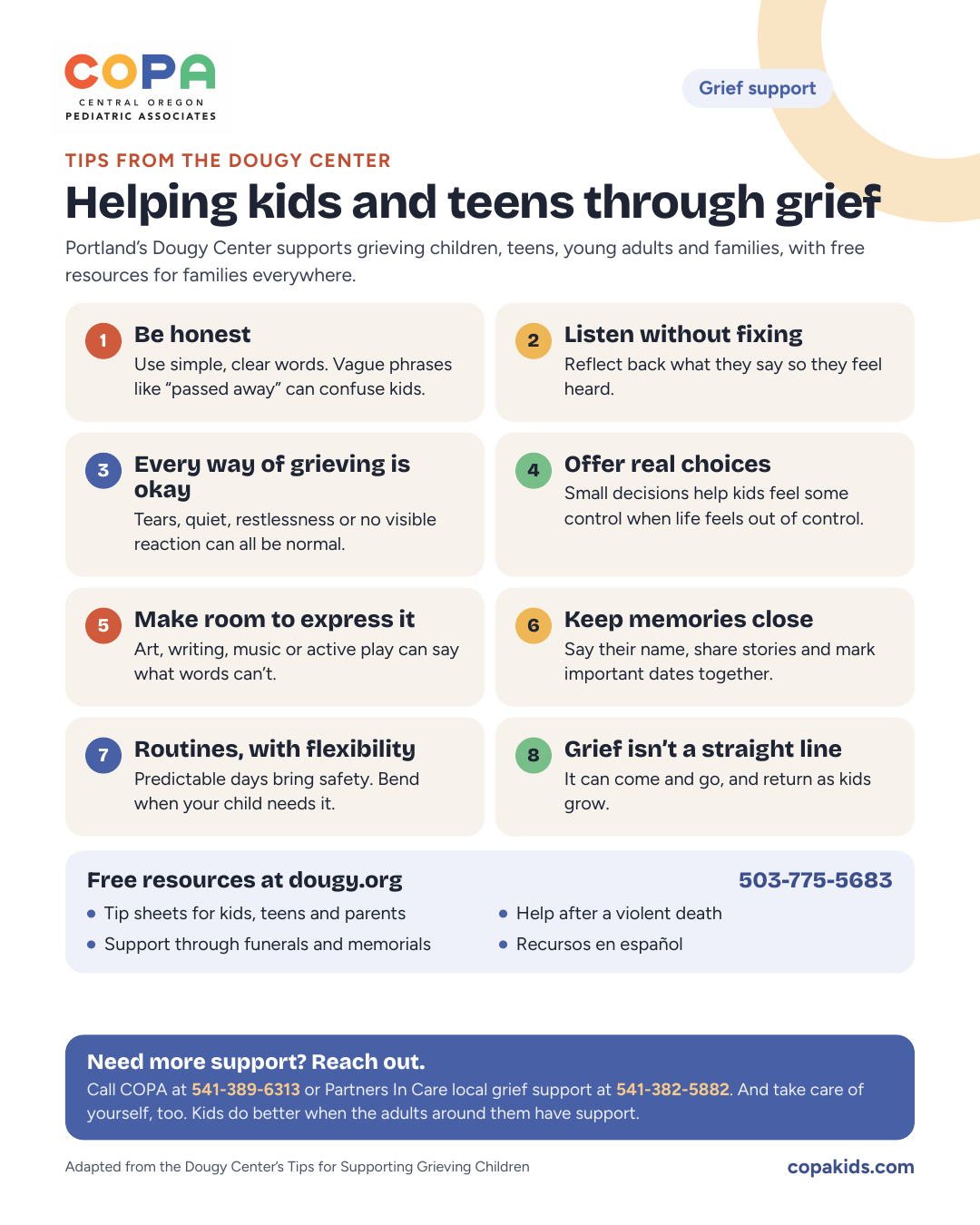
Helping kids and teens through grief
Grief support: tips from the Dougy Center
Portland’s Dougy Center supports grieving children, teens, young adults and families, with free resources for families everywhere.
- Be honest. Use simple, clear words. Vague phrases like “passed away” can confuse kids.
- Listen without fixing. Reflect back what they say so they feel heard.
- Every way of grieving is okay. Tears, quiet, restlessness or no visible reaction can all be normal.
- Offer real choices. Small decisions help kids feel some control when life feels out of control.
- Make room to express it. Art, writing, music or active play can say what words can’t.
- Keep memories close. Say their name, share stories and mark important dates together.
- Routines, with flexibility. Predictable days bring safety. Bend when your child needs it.
- Grief isn’t a straight line. It can come and go, and return as kids grow.
Free resources at dougy.org · 503-775-5683
- Tip sheets for kids, teens and parents
- Help after a violent death
- Support through funerals and memorials
- Recursos en español
Need more support? Reach out. Call COPA at 541-389-6313 or Partners In Care local grief support at 541-382-5882. And take care of yourself, too. Kids do better when the adults around them have support.
Adapted from the Dougy Center’s Tips for Supporting Grieving Children
Leer la versión en texto en español
Cómo ayudar a niños y adolescentes en duelo
Apoyo en el duelo: consejos del Dougy Center
El Dougy Center de Portland apoya a niños, adolescentes, jóvenes y familias en duelo, con recursos gratuitos para familias de todas partes.
- Sea honesto. Use palabras simples y claras. Frases vagas como “se nos fue” pueden confundir a los niños.
- Escuche sin querer arreglar. Repita lo que le dicen para que se sientan escuchados.
- Toda forma de vivir el duelo es válida. Llorar, estar callado, inquieto o no mostrar reacción puede ser normal.
- Ofrezca opciones reales. Decisiones pequeñas les dan algo de control cuando todo parece fuera de control.
- Deje espacio para expresarse. El arte, la escritura, la música o el juego activo dicen lo que las palabras no pueden.
- Mantenga vivos los recuerdos. Diga su nombre, compartan historias y recuerden juntos las fechas importantes.
- Rutinas, con flexibilidad. Los días predecibles dan seguridad. Sea flexible cuando su hijo lo necesite.
- El duelo no es una línea recta. Puede ir y venir, y volver a medida que los niños crecen.
Recursos gratuitos en dougy.org · 503-775-5683
- Hojas de consejos para familias
- Grupo de apoyo Esperanza
- Actividades para niños en duelo
- Recursos en inglés y en español
¿Necesita más apoyo? Comuníquese. Llame a COPA al 541-389-6313 o al apoyo local en el duelo de Partners In Care al 541-382-5882. Y cuídese usted también. A los niños les va mejor cuando los adultos a su alrededor tienen apoyo.
Adaptado de los consejos del Dougy Center para apoyar a niños en duelo