
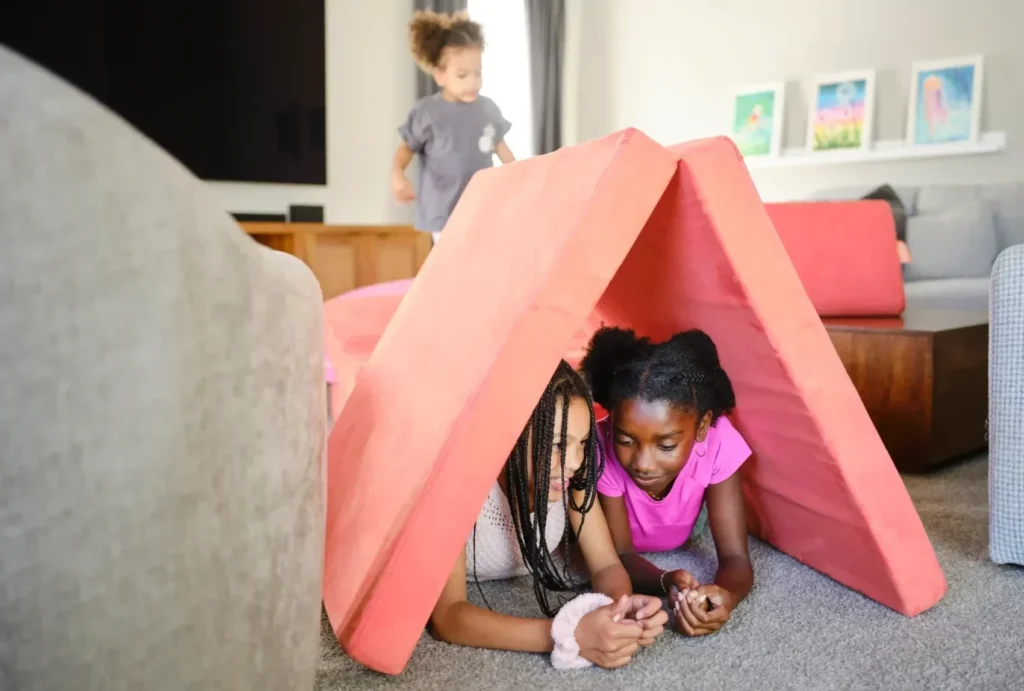
When temperatures drop and daylight fades early, it’s easy for kids (and parents!) to slip into hibernation mode. Between school, early sunsets, and icy sidewalks, families often find themselves spending far more time indoors. While that cozy winter nesting has its charm, staying active and healthy through the colder months takes a little extra creativity.
The good news? Movement doesn’t have to stop when the snow starts falling. With some planning, your home can become a playground for energy, imagination, and connection—all while supporting your child’s winter wellness.
Why Movement Matters in Winter
Cold weather can bring more than just chilly noses. During the winter, kids spend less time outdoors, get less sunlight, and may be exposed to more seasonal viruses. Staying active helps counter all of that by keeping both body and mind in balance.
Boosts Immunity
Regular exercise for kids improves circulation, supports immune function, and helps the body fight off common winter illnesses. Even a few short bursts of movement throughout the day can make a difference.
Lifts Mood
With shorter days and more indoor time, kids (and adults) are more prone to low moods or restlessness. Movement releases endorphins, reduces stress hormones, and improves sleep which are all vital for emotional balance.
Improves Focus and Sleep
When kids get their wiggles out, they sleep better and concentrate more easily during the day. Physical play resets the nervous system, helping with transitions between school, homework, and bedtime.
Keeping bodies moving isn’t just about fitness, it’s about resilience, comfort, and joy during a season that can otherwise feel sluggish.
Creative Indoor Play Ideas
You don’t need fancy equipment or extra space to keep kids active indoors. A little imagination goes a long way.
Transform Familiar Spaces
Hallways, garages, and living rooms can all double as play zones.
- Use painter’s tape to make “balance beams” or obstacle courses on the floor.
- Clear space for dance parties, yoga sessions, or indoor “freeze tag.”
- Roll out a yoga mat for animal walks (bear crawls, crab walks, frog hops) or stretching games.
- In the garage or basement, set up scooter races, mini basketball hoops, or jump rope stations.
Rotate Activities
Keep things fresh by changing up the theme:
- “Adventure Day” — Pretend to explore the jungle with climbing and crawling challenges.
- “Build Day” — Construct a fort or cardboard city and make it part of the play.
- “Music & Movement” — Turn up favorite songs and let kids create their own dance moves.
- “STEM in Motion” — Use magnets, marbles, or toy cars for simple physics fun.
Use What You Have
Laundry baskets become basketball hoops. Couch cushions become stepping stones. A simple roll of masking tape can turn a floor into a hopscotch court or racetrack. The best indoor activities for kids often require zero setup, just an open mind and a sense of play.
Managing Screen Time on Snowy Days
When cabin fever hits, screens are an easy default, but balance is key. Extended screen time can impact posture, mood, and sleep, especially when paired with reduced daylight.
Set Flexible Limits
On stormy days, a little extra movie time is perfectly fine, but it helps to plan screen use intentionally. Try breaking up screen sessions with movement breaks or creative play in between.
Choose Quality Over Quantity
Encourage content that sparks imagination or physical engagement. Many apps and shows now include movement-based games or dance routines which are great options for keeping kids active even when they’re online.
Keep Screens Out of Sleep Spaces
Blue light from screens can interfere with melatonin, making bedtime harder. Powering down devices an hour before bed helps kids unwind and get the restorative sleep their bodies need during cold months.
Model Mindful Use
Kids mirror what they see. Taking your own “tech breaks” and inviting kids to join sends a powerful message that screens are a tool and not a habit.
Keeping the Air (and Kids) Healthy
Winter often means more time in heated, closed-up spaces which can dry out the air and irritate skin, eyes, and airways. Maintaining a healthy indoor environment helps prevent many of those seasonal complaints.
Use Humidifiers Wisely
A cool-mist humidifier can ease congestion and prevent dry throats or noses. Aim for 30–50% humidity, and clean the device regularly to prevent mold or bacteria buildup.
Encourage Hydration
Even when it’s cold, kids lose moisture through breathing and dry air. Offer frequent water breaks and include hydrating snacks like oranges, cucumbers, or soups.
Keep Air Circulating
Open windows briefly each day to bring in fresh air, even if just for five minutes. It helps reduce stuffiness and supports overall cold weather health indoors.
Stay On Top of Hand Hygiene
Germs circulate more easily in shared spaces. Encourage regular handwashing and surface cleaning especially during cold and flu season.
When to Bundle Up and Head Outside
Fresh air and sunlight do wonders for kids’ health—even in winter. With the right layers and a few safety precautions, outdoor play remains one of the best ways to stay active, energized, and happy.
Dress for Success
Use the “plus one layer” rule: give kids one more layer than you’re wearing. Opt for moisture-wicking base layers, insulated outerwear, and waterproof boots. Don’t forget mittens, hats, and neck warmers.
Keep Outings Short and Flexible
Short bursts of outdoor time (15–30 minutes) can make a big difference, especially when it’s sunny. Sledding, snow angels, or neighborhood walks all count as meaningful exercise for kids.
Watch for Signs of Cold Stress
If cheeks turn pale or numb, or if your child shivers or complains of tingling fingers, it’s time to head inside and warm up.
Embrace Imperfect Weather
There’s no such thing as “bad weather”, just different ways to prepare. A bit of drizzle or cold air can be invigorating with proper gear. Kids often surprise us with their enthusiasm once they’re bundled up and outside.
A Balanced Winter Routine
A healthy winter routine blends indoor creativity with outdoor exploration. Aim for variety—some structured play, some free time, and plenty of movement each day. Whether it’s dancing in the kitchen, building snowmen, or jumping on a yoga mat, every bit of movement keeps the body strong and the spirit bright.
Supporting Your Child’s Health All Winter Long
Winter can feel long, but it’s also a wonderful time to slow down, connect, and get creative together. With a mix of indoor play, outdoor adventures, and mindful self-care, families can thrive even through the darkest months.
At Central Oregon Pediatric Associates (COPA), our team supports families year-round with guidance on winter wellness, active play, and seasonal health. If you have questions about your child’s activity level, sleep, or immune health this winter, we’re here to help your family stay healthy and happy—no matter the forecast.