
Screens are everywhere—classrooms, tablets, video calls, and even the grocery store checkout line. For many families, they’re part of learning, connecting, and relaxing. But as helpful as screens can be, today’s kids use them far more than any generation before, and that can take a toll on pediatric vision and eye comfort.
Eye strain, dryness, and fatigue are increasingly common concerns for kids and teens. The good news? With a few thoughtful habits and regular eye exams for kids, parents can help protect developing eyes and support lifelong visual health.
Signs Your Child May Be Straining Their Eyes
Children don’t always notice (or tell you) when something feels “off” with their eyes. But subtle clues can reveal when it’s time to pause and take a closer look.
If your child spends a lot of time reading, doing homework, or using digital devices, keep an eye out for these common signs of eye strain or fatigue:
- Frequent squinting or blinking
- Rubbing their eyes after screen time or schoolwork
- Complaints of headaches, especially after close-up tasks
- Holding books or devices very close to the face
- Avoiding reading or homework, or seeming unusually tired after it
- Tilting their head to one side to see better
Too much close-up focus, especially without breaks, can cause the eyes to work overtime. This strain may lead to dryness, blurred vision, or even temporary difficulty refocusing on distant objects. If symptoms persist, it’s a good time to talk with your child’s healthcare provider or schedule a vision screening.
How Screens Affect Developing Vision
Digital devices demand intense, prolonged focus at a fixed distance. For growing eyes, that can create unique challenges.
Less Blinking, More Dryness
When kids stare at a screen, their blink rate drops dramatically, sometimes by half. Fewer blinks mean less tear film and more dryness or irritation. You may notice them rubbing their eyes or complaining of a “gritty” feeling after using a tablet or computer.
Short-Distance Focus Fatigue
Focusing up close for long stretches can make it harder for the eyes to relax when shifting to distance vision. This can cause temporary blurriness or headaches. Over time, excessive near work has also been linked to an increased risk of myopia (nearsightedness), especially when paired with limited outdoor time.
Blue Light and Sleep
While blue light from screens doesn’t directly damage the eyes, it can interfere with sleep patterns by signaling the brain to stay alert. This is one reason pediatricians recommend turning off screens at least an hour before bedtime, which is good for both kids’ eye care and their overall rest.
Eye-Healthy Habits for School and Home
You don’t have to eliminate screens to protect your child’s pediatric eye health. Instead, focus on balance and proactive habits that give young eyes time to rest and refocus.
Follow the 20-20-20 Rule
Every 20 minutes of screen use, encourage your child to look at something at least 20 feet away for 20 seconds. This simple practice helps relax the tiny muscles inside the eye responsible for near focus. You can even make it a game—set a timer or use “look away” breaks during shows or homework.
Encourage Regular Blinking
A gentle reminder to “blink your eyes” can help prevent dryness during long stretches of reading or screen time. For younger kids, you might turn it into a “blink race” or “eye stretch” moment.
Check Lighting and Screen Position
Make sure screens aren’t too close or too bright. The ideal distance is about arm’s length (roughly 18–24 inches), and screens should be just below eye level to reduce strain. Overhead lighting or glare from windows can also make eyes work harder.
Limit Recreational Screen Time
For most school-age kids, aim for less than two hours of recreational screen use per day outside of homework. Use extra time for imaginative play, outdoor adventures, or hands-on activities that rest the eyes and engage the body.
The Role of Outdoor Play
One of the simplest and most powerful ways to support healthy eye development? Send kids outside to play.
Natural Light Supports Eye Growth
Studies show that children who spend more time outdoors, especially in natural daylight, have a lower risk of developing myopia. Bright outdoor light helps regulate how the eye grows and keeps the focusing system flexible.
Outdoor Play Also Balances Screen Habits
Fresh air and physical movement give the eyes a full workout—focusing on objects near and far, tracking moving targets, and adjusting to different lighting conditions. These natural visual challenges strengthen the very skills that can get “stuck” during too much screen time.
Even 60 to 90 minutes of outdoor play per day makes a meaningful difference. Whether it’s biking, walking the dog, or climbing trees, outdoor activity helps eyes (and kids) thrive.
When to Schedule an Eye Exam
Vision changes can happen gradually, so regular eye exams for kids are essential. Routine screening helps detect issues early before they interfere with learning or cause unnecessary strain.
General Guidelines
At COPA, we begin pediatric vision screening early because healthy vision supports every stage of growth and learning.
- Infants (6 months): We start screenings as early as 6 months old using a non-invasive photo-based tool that helps detect early risk factors for vision issues such as eye misalignment or differences in focus between the eyes.
- Toddlers (1 year and up): We repeat vision screening at 1 year and continue annually through childhood. These regular checks help identify subtle changes before they interfere with development or learning.
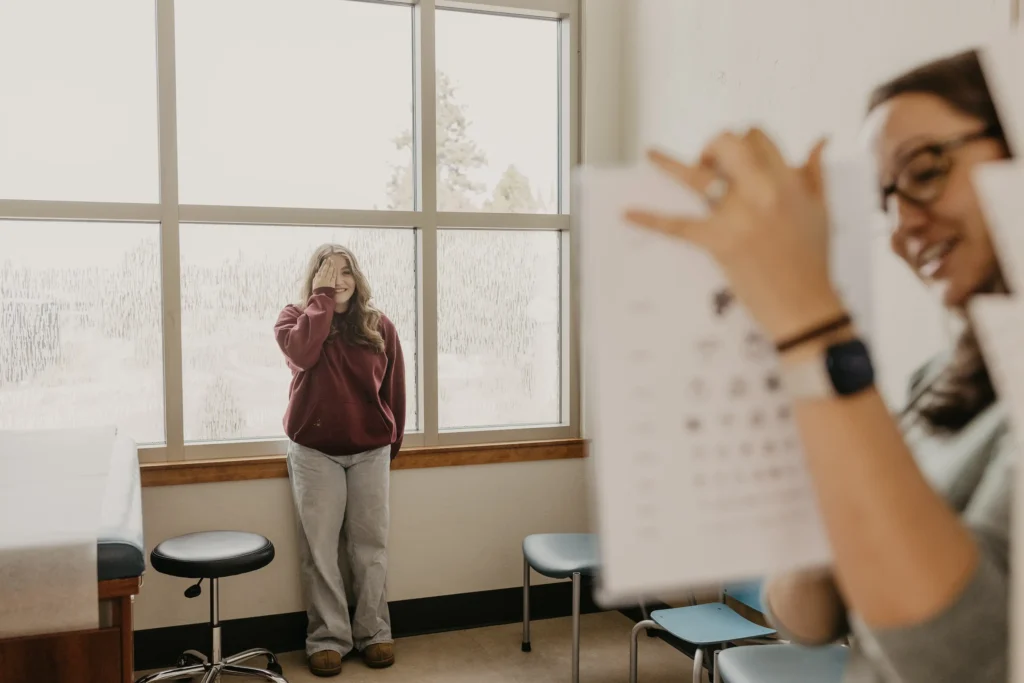
- Preschoolers (5–6 years): Once children are ready for more traditional testing, we use Snellen eye charts to measure visual acuity and track how their eyes are focusing as they grow.
If any of these screenings suggest potential concerns, we refer families to a trusted local optometrist for a comprehensive eye exam. Early detection and follow-up ensure that children receive timely care to keep their vision, and confidence, on track.
Red Flags that Warrant Sooner Attention
Schedule an exam if your child:
- Squints, covers one eye, or tilts their head when looking at something
- Holds objects unusually close
- Complains of headaches, double vision, or eye pain
- Has difficulty reading or concentrating
- Shows sudden changes in school performance or behavior
Early intervention can prevent long-term effects and make everyday tasks—reading, writing, playing—far more comfortable.
A Balanced Approach to Modern Vision
Technology is part of modern childhood, and with the right habits, it doesn’t have to harm eye health. Encouraging screen time safety, prioritizing breaks, and scheduling regular checkups can all help kids use their eyes comfortably and confidently in every environment, from the playground to the classroom.
Helping Your Child Build Lifelong Eye-Healthy Habits
Healthy vision is key to a child’s overall development, impacting everything from learning and coordination to confidence and curiosity. By modeling smart screen habits and building outdoor play into daily routines, parents can help protect those growing eyes while still embracing the benefits of modern learning and play.
At Central Oregon Pediatric Associates (COPA), we value a whole-child approach to care that includes eye health as part of every stage of development. If you ever have questions about your child’s vision, screen use, or developmental milestones, our pediatric team is here to help guide you toward healthy habits for life.