
When your child develops a cough, it can send your parental radar into overdrive. Is it just a common cold, or something more serious like RSV, asthma, or pneumonia? Coughs are one of the most frequent reasons families call or visit their pediatrician, especially during the colder months in Central Oregon.
At Central Oregon Pediatric Associates (COPA), our team knows how worrying it can be to hear your little one coughing through the night. The good news is that most coughs are mild and short-lived. But sometimes, a cough can signal an underlying issue that deserves a closer look. Knowing the difference can help you act quickly and keep your child comfortable and safe.
Types of Coughs Parents Should Know
A cough is the body’s natural way to clear mucus, germs, or irritants from the airways. But not all coughs sound or behave the same way, and paying attention to how your child coughs can offer important clues.
Wet vs. Dry Coughs
A wet cough produces mucus or phlegm and often sounds “chesty.” This type is common with respiratory infections such as colds or mild bronchitis. You might notice your child clearing their throat or coughing up mucus, especially in the morning after lying down overnight.
A dry cough, on the other hand, can sound harsh or tickly without any mucus. Dry coughs often linger after a viral infection or can be triggered by allergies, asthma, or environmental irritants like smoke or dry indoor air, something we see frequently during Bend’s cold winters when heaters run nonstop.
Barking Coughs
A barking cough often points to croup, a viral infection that causes swelling around the vocal cords and windpipe. It’s most common in younger children and is easy to recognize, as it sounds similar to a seal’s bark. These coughs often worsen at night and can sometimes be accompanied by noisy breathing or a hoarse voice.
Whooping Coughs
If your child’s cough comes in long, uncontrolled bursts followed by a high-pitched “whoop” sound as they gasp for air, it could be pertussis (whooping cough). This bacterial infection can be serious, especially in infants and unvaccinated children, and requires prompt medical attention and antibiotics.
Coughs That Vary by Time of Day
Sometimes the timing of a cough provides clues. Coughs that worsen at night might suggest postnasal drip, asthma, or reflux. Morning coughs can occur when mucus collects overnight. Coughs during exercise may signal exercise-induced asthma.
Paying attention to these patterns helps pediatricians determine the likely cause and best next steps for care.
When a Cough Is Normal—and When It’s Not
Most coughs in kids are caused by viral infections, like the common cold. These typically last about a week, maybe two, and gradually improve. However, some symptoms can indicate a more serious problem.
When It’s Probably Just a Cold
- Cough accompanied by mild congestion and runny nose
- No fever or only a low-grade fever
- Normal breathing pattern
- Child is playful, eating, and drinking normally
In these cases, you can usually manage symptoms at home with rest, fluids, and supportive care.
Signs the Cough Might Be More Serious
If you notice any of the following, it’s time to check in with your child’s doctor:
- Fast or labored breathing, chest retractions (seeing ribs or belly pull in with each breath), or nostrils flaring
- Wheezing or whistling sounds when your child breathes out
- Blue or gray lips or fingernails, which signal low oxygen levels
- High fever lasting more than three days
- Cough lasting longer than three weeks
- Coughing fits or vomiting after coughing
- Lethargy, poor feeding, or dehydration
These could point to conditions like RSV, pneumonia, asthma, or bacterial bronchitis.
Prolonged or Recurring Coughs
If your child’s cough lingers for weeks, occurs repeatedly, or flares with exercise or cold air, asthma may be to blame. Seasonal allergies can also cause persistent coughs from postnasal drip. Sometimes, reflux or environmental factors like wildfire smoke can trigger chronic coughs in Central Oregon.
At COPA, we often see children whose “winter cough” turns out to be linked to mild asthma, which can be easily managed once identified.
How Pediatricians Diagnose and Treat Coughs
If your child’s cough is lingering or accompanied by any red flags, a visit to your pediatrician is the best next step.
What to Expect During a COPA Respiratory Visit
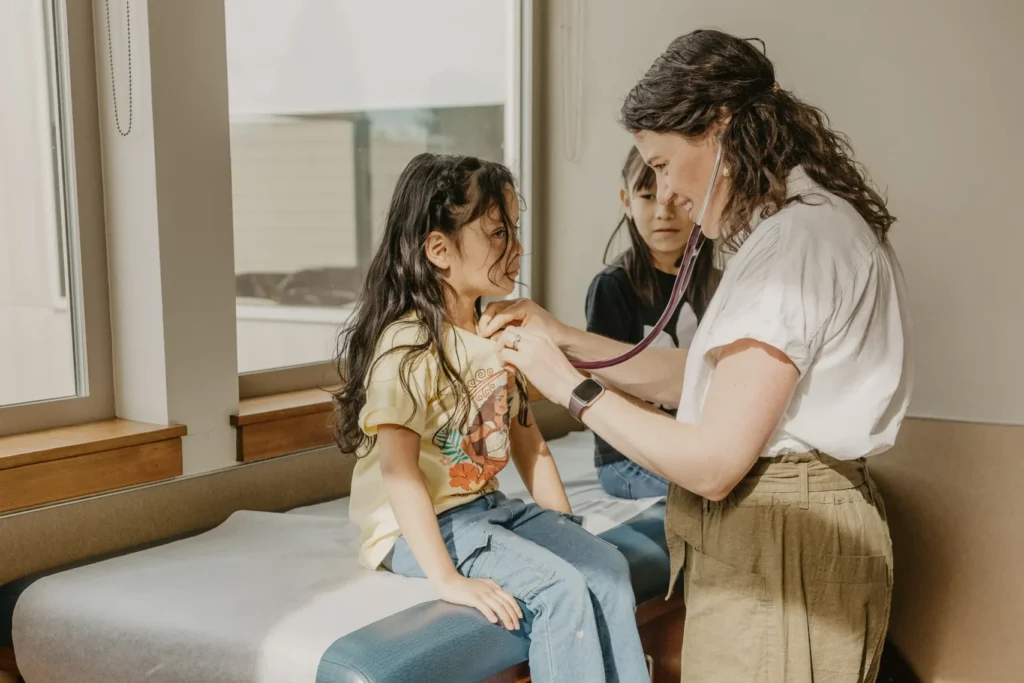
Your COPA provider will start with a thorough history—when the cough began, what it sounds like, whether it’s worse at night, and what other symptoms you’ve noticed. They’ll then perform a detailed physical exam, listening carefully to your child’s lungs and airway.
If needed, we may use pulse oximetry (a simple, painless device that clips on a finger) to check oxygen levels, or recommend a chest X-ray to rule out pneumonia or other causes.
Rapid Testing for Common Viruses
During the respiratory season, our pediatric services in Bend and Redmond offer rapid testing for flu, RSV, and COVID-19. Quick results help us determine the right course of treatment and guide safe school attendance.
Tips for Easing Cough Discomfort at Home
Whether your child’s cough is mild or more persistent, there are many ways to make them more comfortable.
1. Keep the Air Moist and Warm
Dry Central Oregon air can irritate the airways. A cool-mist humidifier in your child’s bedroom can help soothe the throat and loosen mucus. Just be sure to clean the humidifier regularly to prevent mold buildup.
2. Offer Plenty of Fluids
Hydration keeps mucus thin and easier to clear. Offer water, warm broths, or herbal teas (for older kids). For younger children, frequent breastfeeding or formula feeds are best.
3. Honey for Kids Over Age 1
Honey can calm an irritated throat and reduce nighttime coughing. Try giving ½ to 1 teaspoon before bed. (Never give honey to babies under 12 months due to the risk of botulism.)
4. Rest and Reassurance
Coughing can interrupt sleep, but rest is one of the best medicines. Let your child’s body recover, and reassure them, especially if the cough sounds scary.
5. Use Saline and Gentle Suction for Infants
For babies with nasal congestion, a few drops of saline solution followed by gentle suction with a bulb syringe can clear the nose before feeding or sleeping.
6. Avoid Over-the-Counter Cough Medicines for Young Kids
Cough and cold medicines aren’t recommended for children under six. They don’t shorten illness and can cause side effects. Instead, focus on comfort measures and check with your pediatrician before giving any medication.
7. Elevate the Head During Sleep
If postnasal drip or congestion worsens coughing at night, slightly elevating your child’s head (for older children) can help ease symptoms.
How COPA Can Help with Persistent Coughs
At Central Oregon Pediatric Associates (COPA), we’re here for all your child’s respiratory health needs, from the first sniffle to more complex, chronic conditions.
Same-Day Visits for Worsening Symptoms
We offer same-day appointments in both our Bend and Redmond locations for children who are having trouble breathing, running high fevers, or whose cough is getting worse instead of better. Our triage nurses can help determine whether your child should be seen right away or can be managed at home.
Ongoing Care for Asthma and Allergies
For kids with asthma, chronic cough, or allergies, COPA provides ongoing care and monitoring to keep symptoms under control. Our pediatric allergy and immunology specialist is available to help pinpoint triggers and develop long-term management plans.
Coordinated Care for Complex Diagnoses
If your child’s cough turns out to be linked to another diagnosis—such as reflux, chronic sinus issues, or a condition that requires pulmonology input—we coordinate care seamlessly with specialists. Having an established medical home at COPA means your child’s history, test results, and treatment plans stay connected across their care team.
Family-Focused Support
Most importantly, we’re here to reassure and guide you. We understand how stressful it can be to watch your child struggle with coughing or breathing issues. Our providers take the time to explain what’s happening, answer your questions, and develop a clear plan that gives you peace of mind.
When a Child’s Cough Deserves a Closer Look
A cough is a normal, healthy reflex, but when it lingers or comes with worrisome symptoms, it’s worth getting checked out. Trust your instincts: you know your child best.
If your child is breathing rapidly, seems unusually tired, has a high fever, or their cough is keeping them from sleeping or playing, schedule a visit with your COPA provider. Our pediatric team is trained to evaluate coughs of all kinds, from mild to complex, and to ensure your child receives the right care quickly.
At COPA, we believe that every child deserves to breathe freely and feel comfortable again. so your family can rest easy knowing you’re in good hands.